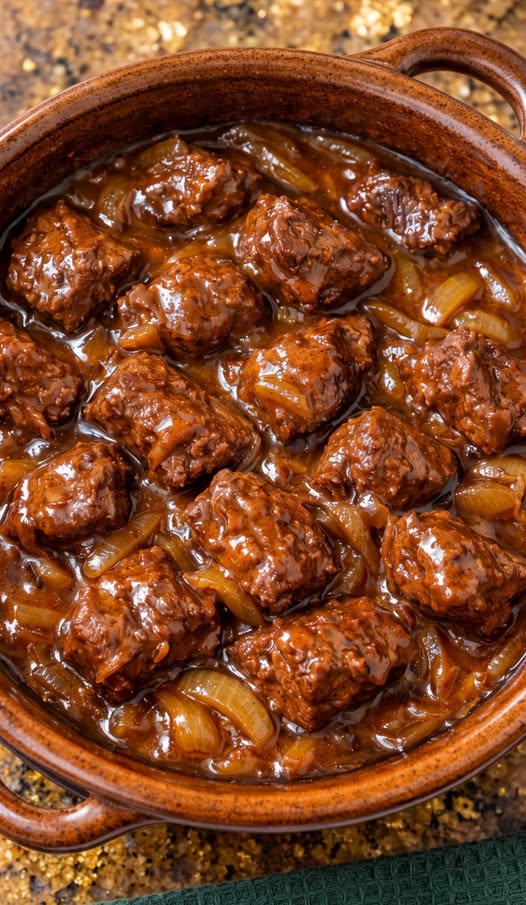
Step 4: Check the Tenderness
Once the cooking time is nearly complete, carefully remove the lid and check the beef with a fork.
The meat should be very tender and easy to pull apart. If it still feels firm or difficult to shred, replace the lid and continue cooking until it reaches the desired tenderness.
If you prepared a whole roast, use two forks to gently shred it into large pieces. Alternatively, slice or separate it into chunks.
Step 5: Finish the Gravy
Give the gravy a gentle stir to combine the cooking juices with the sauce.
If the gravy seems thinner than you’d like, transfer some of the liquid to a small saucepan and simmer it until it reaches your preferred consistency. You can also use a cornstarch slurry if you don’t mind adding an optional ingredient.
Return the thickened gravy to the slow cooker and stir gently to coat the beef.
Taste the gravy and adjust the seasoning if desired.
Step 6: Serve and Enjoy
Spoon generous portions of tender beef onto serving plates and cover with plenty of warm brown gravy.
Serve immediately while everything is hot and delicious. The beef should be wonderfully tender, and the gravy should have a rich, savory flavor that makes every bite satisfying.
What to Serve with Beef and Gravy
Classic Beef and Gravy is incredibly versatile and pairs beautifully with a variety of comforting side dishes.
Here are some delicious serving ideas:
-
Creamy mashed potatoes: Probably the most classic pairing. The potatoes soak up the rich gravy and create a wonderfully comforting combination.
-
Egg noodles: Serve the beef and gravy over buttered egg noodles for a hearty, satisfying dinner.
-
White rice: Fluffy rice makes an excellent base for soaking up every bit of the savory sauce.
-
Roasted vegetables: Carrots, green beans, broccoli, or Brussels sprouts add freshness and color to the plate.
-
Buttered dinner rolls: Warm rolls are perfect for dipping into the extra gravy.
-
Creamy polenta: A smooth, buttery polenta provides another delicious base for the tender beef.
Tips for Making the Best Beef and Gravy
Choose the right cut of beef. Chuck roast is particularly good for slow cooking because its marbling and connective tissue help create tender meat. Leaner cuts may become dry if cooked for too long.
Don’t rush the cooking process. Beef chuck needs sufficient time to become tender. If the meat is still tough, it usually needs more cooking rather than less.
Keep the lid closed. Opening the slow cooker repeatedly releases heat and slows the cooking process.
Don’t add too much liquid. The beef naturally releases juices as it cooks, so the gravy will become more flavorful and abundant over time.
Adjust the gravy consistency. If you prefer thicker gravy, use a little cornstarch mixed with cold water to thicken it toward the end of cooking.
Let the flavors develop. Once cooking is finished, allowing the beef to sit in the gravy for a few minutes before serving helps everything come together.
Storage and Reheating Instructions
One of the advantages of Classic Beef and Gravy is that it tastes just as delicious the next day. In fact, the flavors often become even more developed after resting overnight.
Refrigeration: Allow the leftovers to cool slightly, then transfer the beef and gravy into an airtight container. Refrigerate within two hours of cooking and enjoy within 3–4 days.
Freezing: This dish freezes very well. Place completely cooled beef and gravy into freezer-safe containers or bags, leaving a little room for expansion. Freeze for up to 3 months for best quality.
Reheating: Warm leftovers in a saucepan over medium-low heat, stirring occasionally until heated through. Add a small splash of water or broth if the gravy has thickened too much during storage. You can also reheat individual portions in the microwave, stirring halfway through.
For food safety, reheat leftovers to an internal temperature of 165°F (74°C).
Frequently Asked Questions
1. Can I use stew meat instead of chuck roast?
Absolutely! Stew meat works well in this recipe. Because the pieces are smaller, check them periodically to avoid overcooking. The result will still be tender, flavorful beef covered in delicious gravy.
2. Can I make beef and gravy without a slow cooker?
Yes. You can prepare this dish in a covered Dutch oven or oven-safe pot. Combine the beef, gravy mix, and water, cover tightly, and cook in an oven at 300°F (150°C) for approximately 3–4 hours, or until the beef is fork-tender. Check occasionally to ensure there is enough liquid.
3. Why is my beef still tough?
Beef chuck contains connective tissue that needs time to break down during cooking. If the meat is still tough, continue cooking and check again later. It may simply need additional time.
4. How can I make the gravy thicker?
If your gravy is too thin, mix one tablespoon of cornstarch with one tablespoon of cold water. Stir this mixture into the hot gravy and allow it to simmer until thickened.
5. Can I prepare this recipe the night before?
Yes! You can prepare the gravy mixture and cut the beef ahead of time, then store them separately in the refrigerator. Combine everything in the slow cooker when you’re ready to cook. For food safety, avoid leaving raw beef sitting in the slow cooker insert at room temperature.
6. Can I add vegetables to this recipe?
Certainly! Although the original recipe uses only three ingredients, you can add carrots, onions, mushrooms, or potatoes if you want a more complete one-pot meal.
Final Thoughts
Classic Beef and Gravy (3 Ingredients) is proof that delicious homemade comfort food doesn’t have to be complicated. With a tender chuck roast, convenient brown gravy mix, and a little water, you can prepare a hearty dinner that requires very little hands-on effort.
The slow cooker transforms simple ingredients into a satisfying meal filled with tender beef and rich, savory gravy. Serve it over mashed potatoes, rice, or egg noodles, and you’ve got a comforting dinner that everyone will look forward to.
Whether you’re preparing a family meal, planning ahead for a busy week, or simply craving an old-fashioned homemade dinner, this easy beef and gravy recipe deserves a place in your regular dinner rotation.





No Responses Yet