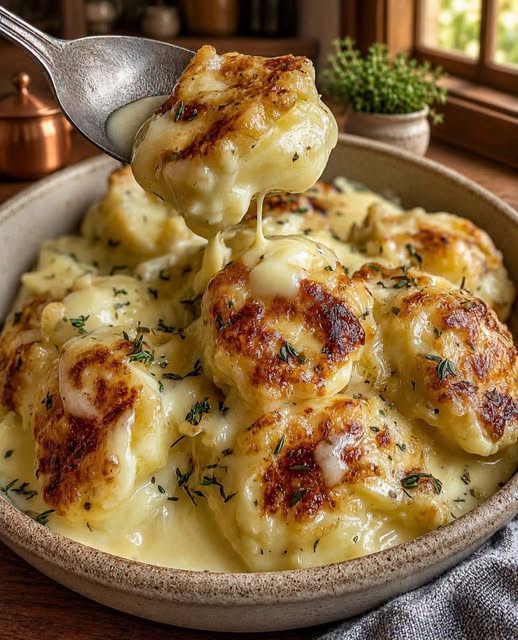
Step 4: Finish the Cabbage
Once the cabbage has softened, remove the lid and stir in the apple cider vinegar.
Allow the mixture to cook uncovered for another 3–5 minutes. This helps excess liquid evaporate and allows the flavors to concentrate.
Taste and adjust the seasoning if necessary. Add a little more salt, pepper, or vinegar depending on your preference.
Remove the skillet from the heat, cover it loosely, and keep the cabbage warm while preparing the dumplings.
Step 5: Prepare the Dumpling Dough
In a large mixing bowl, combine the flour, baking powder, salt, and black pepper.
In a separate bowl, whisk together the eggs, milk, and melted butter until smooth.
Gradually pour the wet ingredients into the dry ingredients, stirring gently until everything is combined.
The dough should be thick, soft, and slightly sticky. Avoid overmixing because doing so can make the dumplings dense instead of tender.
If the dough seems too dry, add a tablespoon of milk at a time until it reaches the right consistency.
Step 6: Shape the Dumplings
Bring a large pot of salted water to a gentle boil.
Using two teaspoons or a small spoon, scoop portions of the dumpling dough and carefully drop them into the simmering water.
You can make the dumplings small and bite-sized or slightly larger depending on your preference.
Avoid overcrowding the pot. Cook the dumplings in batches if necessary so they have enough room to expand.
Step 7: Cook the Dumplings
Allow the dumplings to cook for approximately 8–10 minutes, depending on their size.
They will gradually expand and become lighter as they cook. When they float to the surface, continue cooking for another 2–3 minutes to ensure the centers are fully cooked.
Remove one dumpling and cut it open to check that the inside is cooked through, with no raw dough remaining.
Use a slotted spoon to transfer the finished dumplings to a plate.
Step 8: Prepare the Butter and Onion Topping
For an extra layer of flavor, prepare a simple buttery onion topping.
Melt 2 tablespoons of butter in a small skillet over medium heat. Add the finely diced onion and cook for approximately 4–5 minutes until softened and lightly golden.
The butter will absorb the sweetness of the onions, creating a delicious topping for the dumplings.
Step 9: Bring Everything Together
Return the cooked cabbage to low heat if it has cooled.
Arrange the dumplings over the cabbage or gently fold them into the mixture. Be careful not to break them apart.
Drizzle the buttery onion mixture over the dumplings and cabbage.
Finish with freshly chopped parsley for a touch of color and freshness.
Your homemade German Cabbage and Dumplings is now ready to serve!
Tips for Making the Best German Cabbage and Dumplings
A few simple techniques can make a big difference in the final result.
Don’t rush the cabbage: Cooking it slowly allows the natural sweetness to develop while keeping the texture tender and pleasant.
Avoid overmixing the dumpling dough: Stir only until the ingredients are combined. Overworking the dough can result in tough dumplings.
Keep the water at a gentle boil: Very aggressive boiling can cause delicate dumplings to break apart.
Season gradually: Cabbage absorbs seasoning as it cooks, so taste it toward the end and adjust as needed.
Make the dumplings evenly sized: Similar-sized dumplings cook at approximately the same rate, making it easier to achieve a consistent texture.
Delicious Variations to Try
One of the best things about traditional cabbage dishes is how easily they can be adapted.
-
German Cabbage and Bacon: Cook 4–5 slices of chopped bacon until crispy. Use some of the bacon fat to cook the onions, then sprinkle the bacon over the finished dish.
-
Sausage and Cabbage Dumplings: Add sliced smoked sausage or bratwurst to the cabbage while it cooks for a heartier meal.
-
Sweet and Sour Cabbage: Increase the apple cider vinegar slightly and add another teaspoon of sugar for a more noticeable sweet-and-tangy flavor.
-
Herbed Dumplings: Add chopped parsley, chives, or a little thyme to the dumpling dough.
-
Brown Butter Dumplings: Instead of regular melted butter, use lightly browned butter in the dumpling mixture for a richer, nuttier flavor.
What to Serve with German Cabbage and Dumplings
Although this dish is filling enough to serve on its own, it pairs wonderfully with other traditional German-inspired foods.
Consider serving it alongside:
-
German bratwurst: Savory grilled sausages complement the sweetness of the cabbage.
-
Roasted pork: Tender roasted pork makes an excellent addition to this hearty meal.
-
German cucumber salad: A refreshing cucumber salad with vinegar and dill provides a pleasant contrast.
-
Mustard: A little German-style mustard adds a sharp, tangy flavor.
-
Roasted vegetables: Carrots, potatoes, and green beans make wonderful side dishes.
For a simple family dinner, serve a generous portion of cabbage and dumplings with grilled sausage and a spoonful of mustard.
How to Store and Reheat Leftovers
If you have leftovers, allow the cabbage and dumplings to cool completely before transferring them into an airtight container.
Refrigerator: Store in the refrigerator for up to 3–4 days.
Freezer: The cooked cabbage freezes well for approximately 2–3 months. Dumplings are best enjoyed fresh, as freezing and thawing can change their texture.
Reheating: Warm the cabbage and dumplings in a covered skillet over low heat. Add a small splash of broth or water to prevent sticking. Stir gently until heated throughout.
You can also reheat individual portions in the microwave, using short intervals and stirring carefully between them.
Frequently Asked Questions
1. Can I use red cabbage instead of green cabbage?
Yes! Red cabbage can be used, although it has a slightly different flavor and a firmer texture. Keep in mind that it will give the finished dish a beautiful purple color.
2. Can I make the dumplings ahead of time?
Dumplings are best prepared shortly before serving. However, you can measure and mix the dry ingredients ahead of time to make preparation quicker.
3. Why are my dumplings too dense?
Dense dumplings usually result from overmixing the dough, using too much flour, or cooking them at an excessively vigorous boil. Keep the dough soft and handle it gently.
4. Do I have to use caraway seeds?
No. Caraway seeds are optional. They add a traditional earthy, slightly sweet flavor that complements cabbage, but the dish is delicious without them.
5. Can I make this recipe vegetarian?
Absolutely! Simply use vegetable broth instead of chicken broth and make sure your butter and other ingredients are suitable for your dietary preferences.
6. Can I use store-bought dumplings?
Yes, if you are short on time. Prepare them according to their package instructions and serve them with the homemade cabbage.
Final Thoughts
German Cabbage and Dumplings is a wonderful reminder that delicious meals don’t need complicated ingredients or elaborate preparation. With tender cabbage, sweet sautéed onions, and soft homemade dumplings, this traditional comfort food brings warmth and homemade goodness to the dinner table.
It’s affordable, satisfying, and easy to customize with your favorite additions, whether you prefer crispy bacon, smoked sausage, or a simple buttery topping.
Serve it fresh from the stove on a chilly evening, share it with family, and enjoy a comforting taste of traditional German-inspired home cooking.





No Responses Yet