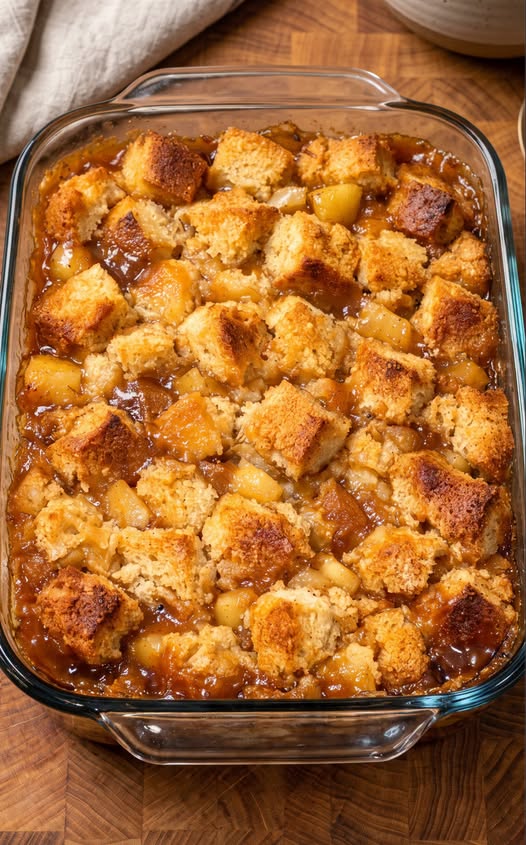
Step 5: Transfer to the Baking Dish
Once the bread has absorbed some of the custard, transfer the entire mixture into your prepared baking dish.
Spread it evenly, gently pressing down any bread pieces that remain above the liquid so they can absorb more moisture.
Don’t press too firmly, as you want to preserve some of the bread’s texture rather than compressing everything into a dense layer.
For an especially delicious finish, drizzle a little additional melted butter over the top before placing the dish in the oven.
Step 6: Bake Until Golden and Set
Place the baking dish in the preheated oven and bake for approximately 45–55 minutes.
During baking, the custard will gradually set, the bread will become tender, and the pineapple will release its sweet, fruity aroma throughout the dessert.
The top should become lightly golden brown, with a slightly crisp surface.
To check whether the pudding is ready, insert a knife near the center. It should come out mostly clean, without liquid custard. The center should look set rather than watery.
If the top begins browning too quickly before the center is cooked, loosely cover the dish with aluminum foil and continue baking.
Once finished, remove the dish from the oven and allow it to rest for about 10–15 minutes before serving. This resting time helps the pudding firm up and makes it easier to cut into portions.
Step 7: Prepare the Optional Vanilla Glaze
While the bread pudding is cooling slightly, prepare the simple vanilla glaze.
In a small bowl, combine the powdered sugar, milk, and vanilla extract. Whisk until the mixture becomes smooth and pourable.
If the glaze is too thick, add a few drops of milk at a time. If it becomes too thin, add a little more powdered sugar.
Drizzle the glaze over the slightly warm bread pudding just before serving.
The sweet vanilla glaze adds an extra layer of flavor that pairs beautifully with the pineapple and buttery custard.
Step 8: Serve and Enjoy
Your homemade Pineapple Bread Pudding is now ready to enjoy!
Serve it slightly warm for the best texture and flavor. Each portion should have a golden top, a soft custardy center, and little bursts of sweet pineapple throughout.
For an extra-special dessert, serve each slice with a scoop of vanilla ice cream, a spoonful of whipped cream, or a light dusting of powdered sugar.
The contrast between the warm pudding and cold ice cream makes every bite especially delicious.
Tips for Making the Best Pineapple Bread Pudding
1. Choose the right bread. Brioche and French bread are excellent choices because they hold their shape while absorbing the custard. Regular white bread also works perfectly well.
2. Drain the pineapple properly. Removing excess juice is essential for achieving a pudding that sets correctly instead of becoming soggy.
3. Allow enough soaking time. Giving the bread 15–20 minutes to absorb the custard helps create a rich, evenly textured dessert.
4. Avoid overbaking. Baking for too long can make the pudding dry. Remove it once the center is set and the top is golden.
5. Adjust the sweetness. Pineapple can vary in sweetness depending on the brand. You can slightly reduce the sugar if you prefer a less sweet dessert.
6. Add a little coconut. For a more tropical flavor, mix in ½ cup of shredded coconut before baking.
Delicious Variations to Try
One of the best things about Pineapple Bread Pudding is how easily you can customize it.
-
Pineapple Coconut Bread Pudding: Add shredded coconut to the bread mixture for a tropical combination reminiscent of a classic piña colada.
-
Pineapple Pecan Bread Pudding: Stir in chopped pecans for a crunchy contrast to the soft custard.
-
Caramel Pineapple Bread Pudding: Drizzle caramel sauce over the finished pudding for a richer, sweeter dessert.
-
Pineapple Raisin Bread Pudding: Add raisins for little pockets of natural sweetness throughout the pudding.
-
Cream Cheese Pineapple Bread Pudding: Add small cubes of softened cream cheese to create creamy, slightly tangy bites.
How to Store Leftovers
If you have leftover Pineapple Bread Pudding, allow it to cool completely before storing.
Refrigerator: Transfer the leftovers to an airtight container or cover the baking dish tightly with plastic wrap or aluminum foil. Refrigerate for up to 4 days.
Freezer: For longer storage, cut the cooled pudding into individual portions and wrap each piece securely. Place the portions in a freezer-safe container and freeze for up to 2 months. The texture may become slightly softer after thawing.
Reheating: Warm individual portions in the microwave for approximately 30–60 seconds, depending on their size. You can also reheat larger portions in an oven preheated to 325°F (165°C), covering the dish loosely with foil to prevent the top from becoming too dark.
For frozen portions, thaw them overnight in the refrigerator before reheating.
What to Serve with Pineapple Bread Pudding
Although this dessert is delicious on its own, a few simple additions can make it even more enjoyable.
-
Vanilla ice cream: Its cool, creamy texture complements the warm pineapple pudding beautifully.
-
Fresh pineapple: A few small pieces add freshness and enhance the fruity flavor.
-
Whipped cream: A light spoonful creates a soft, airy contrast to the rich custard.
-
Caramel sauce: Adds a buttery sweetness that works wonderfully with the pineapple.
-
Toasted coconut: Provides a delicate crunch and reinforces the tropical flavor.
Frequently Asked Questions
Can I make Pineapple Bread Pudding ahead of time?
Yes! You can assemble the bread pudding, cover it tightly, and refrigerate it for several hours or overnight before baking. For the best results, allow it to sit at room temperature for approximately 20–30 minutes while the oven preheats. If it is still cold when it goes into the oven, it may need a little extra baking time.
Can I use fresh pineapple instead of canned pineapple?
Absolutely. Fresh pineapple works beautifully in this recipe. Simply chop it into small pieces and drain any excess juice before adding it to the bread mixture. Make sure the pineapple is ripe and sweet for the best flavor.
Why is my bread pudding soggy in the middle?
This usually happens when there is too much liquid in the mixture, the pineapple hasn’t been drained properly, or the pudding hasn’t baked long enough. Make sure the bread absorbs the custard before baking and check that the center is fully set before removing it from the oven.
Can I use evaporated milk instead of whole milk?
Yes. Evaporated milk can be used in place of whole milk. It gives the custard a slightly richer, creamier consistency.
Should Pineapple Bread Pudding be served warm or cold?
It can be enjoyed either way, but serving it slightly warm is particularly delicious. The custard remains soft, the pineapple flavor is more noticeable, and it pairs wonderfully with cold vanilla ice cream.
Can I make this recipe without nuts?
Of course! The pecans and walnuts are completely optional. Simply leave them out or replace them with shredded coconut or raisins.
Final Thoughts
Pineapple Bread Pudding is a wonderful way to turn simple pantry ingredients into a dessert that feels both comforting and special. The combination of buttery bread, creamy vanilla custard, warm spices, and sweet pineapple creates a beautiful balance of flavors and textures in every serving.
Whether you prepare it for a holiday celebration, a weekend family dinner, or an ordinary afternoon when you’re craving something sweet, this easy homemade dessert is sure to bring something delicious to the table.
Serve it warm with vanilla ice cream or a drizzle of homemade glaze, and enjoy a fruity twist on a timeless classic!








No Responses Yet