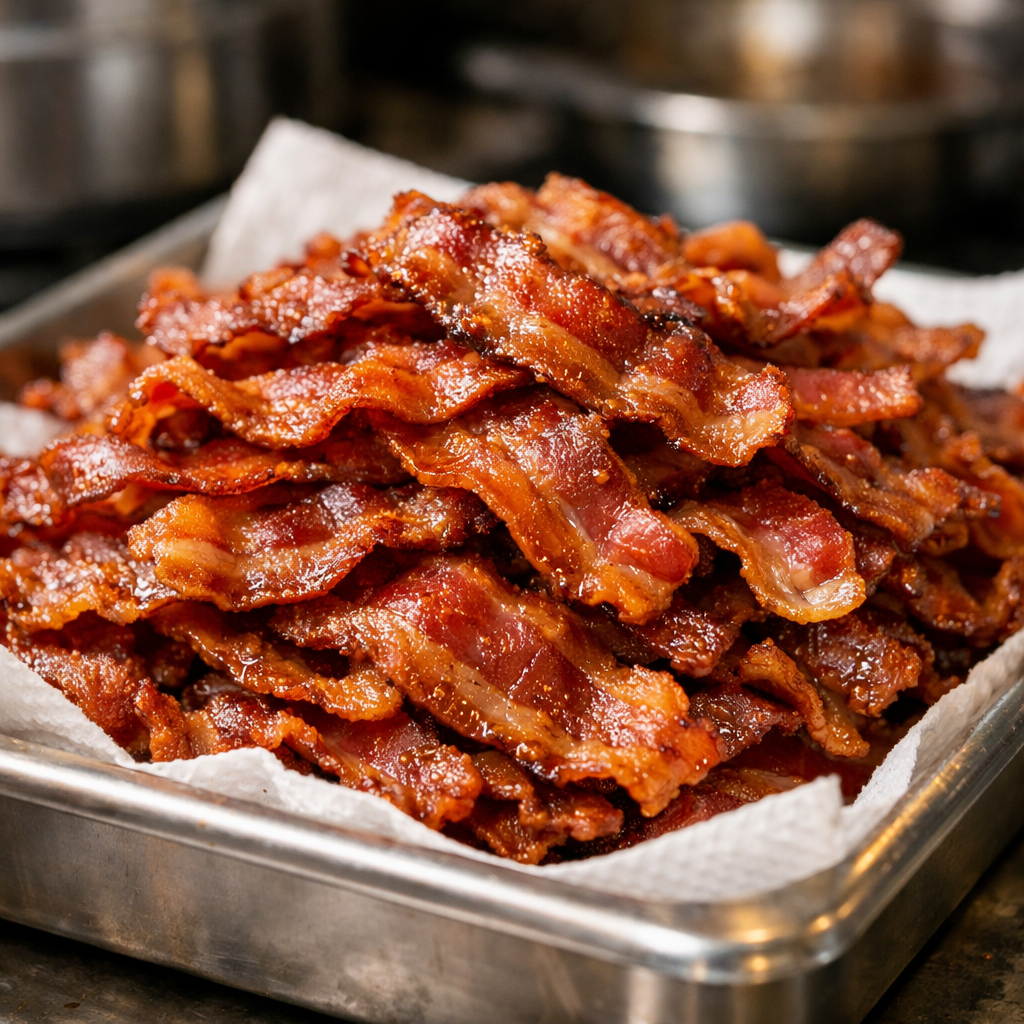
How to Cook Perfect Bacon in the Oven: The Ultimate Step-by-Step Guide
Cooking bacon in the oven is one of the easiest and cleanest ways to make crispy, evenly cooked bacon without standing over a hot pan. Instead of flipping strips one by one and dealing with grease splatter on the stove, oven-baked bacon cooks flat, crisp, and golden with very little effort.
This method is perfect when you are making breakfast for a family, preparing bacon for sandwiches, adding bacon to salads, or meal-prepping for the week. Once you learn the right temperature, pan setup, and timing, you can make perfect bacon every time.
Why Cook Bacon in the Oven?
Oven bacon is popular because it cooks more evenly than stovetop bacon. The heat surrounds the bacon from all sides, allowing the fat to render slowly while the meat becomes crisp.
It is also much easier when cooking a large batch. A sheet pan can hold many strips at once, and you do not have to flip them constantly. Cleanup is also easier if you line the pan with foil or parchment paper.
The result is bacon that is crispy, flavorful, and less messy.
Ingredients
You only need one main ingredient:
- 1 package bacon, regular-cut or thick-cut
Optional additions:
- Black pepper
- Brown sugar
- Maple syrup
- Honey
- Chili flakes
- Smoked paprika
- Cracked pepper and cayenne
- Garlic powder
Equipment Needed
- Large baking sheet
- Aluminum foil or parchment paper
- Oven-safe wire rack, optional
- Tongs
- Paper towels
- Plate or cooling rack
Step 1: Choose the Right Bacon
Start with your preferred type of bacon. Regular-cut bacon cooks faster and becomes crispier. Thick-cut bacon takes longer and has a meatier bite.
For very crispy bacon, choose regular-cut slices. For chewy edges with a crispy outside, thick-cut bacon is a great choice.
Try to use bacon slices that are similar in thickness. This helps them cook evenly.
Step 2: Preheat the Oven
Preheat your oven to 400°F / 200°C.
This is the best all-purpose temperature for oven-baked bacon. It is hot enough to crisp the bacon but not so hot that it burns before the fat renders.
For softer bacon, you can bake at 375°F / 190°C.
For extra crispy bacon, you can bake at 425°F / 220°C, but you must watch it closely.
Step 3: Prepare the Baking Sheet
Line a baking sheet with aluminum foil or parchment paper.
Foil makes cleanup very easy because you can let the grease cool and then lift it out. Parchment paper also works well and helps prevent sticking.
For crispier bacon, place an oven-safe wire rack on top of the lined baking sheet. The rack lifts the bacon above the grease so air can circulate around it.
For slightly richer, more classic bacon, place the strips directly on the lined pan. The bacon will cook in its own fat and become flavorful and crisp.
Step 4: Arrange the Bacon
Lay the bacon strips in a single layer on the baking sheet.
Do not overlap the slices. If the bacon overlaps, those areas will cook unevenly and may stay soft.
The strips can touch slightly because they will shrink as they cook, but they should not be stacked on top of each other.
If you are cooking a lot of bacon, use two baking sheets instead of overcrowding one pan.
Step 5: Add Seasoning, If Desired
Plain bacon is delicious on its own, but you can add extra flavor before baking.
For sweet bacon, sprinkle a little brown sugar over the strips.
For spicy bacon, add black pepper, cayenne, or chili flakes.
For maple bacon, brush the slices lightly with maple syrup during the last few minutes of baking, not at the beginning. Adding syrup too early can cause it to burn.
Seasoning is optional, so you can keep it simple or customize it depending on how you plan to serve the bacon.
Please Head On keep on Reading (>)







No Responses Yet