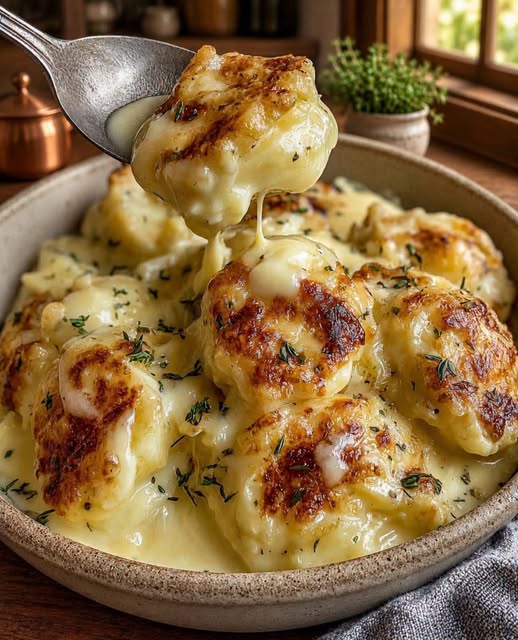
Step 4: Simmer Until Tender
Cover the pot with a lid and reduce the heat to medium-low.
Allow the cabbage to simmer for approximately 20 to 30 minutes, stirring occasionally. As it cooks, the cabbage will soften and absorb the flavors of the broth, butter, and seasonings.
If the cabbage begins to stick to the bottom of the pot, add a small splash of broth or water.
For a slightly caramelized flavor, remove the lid during the final 5 minutes of cooking and allow some of the excess liquid to evaporate.
Taste the cabbage and adjust the salt, pepper, or vinegar as needed.
Step 5: Prepare the Dumpling Dough
While the cabbage is cooking, prepare the homemade dumplings.
In a large mixing bowl, combine the flour, baking powder, and salt. Whisk the dry ingredients together to distribute everything evenly.
In a separate bowl, beat the eggs with the milk and melted butter.
Gradually pour the wet ingredients into the flour mixture, stirring gently until a thick, soft dough forms.
The dough should be moist and slightly sticky but firm enough to hold its shape. Avoid overmixing, as this can make the dumplings dense and tough.
Let the dough rest for approximately 5 minutes.
Step 6: Cook the Dumplings
Bring a large pot of salted water to a gentle boil.
Using two teaspoons or a small cookie scoop, carefully drop small portions of dumpling dough into the simmering water. Keep the dumplings relatively small so they cook evenly.
Avoid overcrowding the pot. Work in batches if necessary.
Allow the dumplings to cook for approximately 5 to 8 minutes, depending on their size. They will gradually rise toward the surface as they cook.
Once they are floating, allow them another minute or two, then remove one and cut it open to make sure the center is fully cooked.
Use a slotted spoon to transfer the cooked dumplings to a plate.
Step 7: Bring Everything Together
Once the cabbage is tender and the dumplings are cooked, it’s time to combine the two components.
Gently fold the dumplings into the cabbage mixture. Stir carefully to avoid breaking them apart.
Allow everything to cook together over low heat for another 2 to 3 minutes so the dumplings can absorb some of the delicious cabbage juices.
If you prefer, you can also serve the dumplings directly over a generous portion of cabbage rather than mixing everything together.
Step 8: Garnish and Serve
Turn off the heat and sprinkle the dish with freshly chopped parsley.
For an extra touch of richness, drizzle a little melted butter over the dumplings and finish with freshly ground black pepper.
Serve immediately while everything is warm and tender.
Tips for Making the Best German Cabbage and Dumplings
Don’t rush the cabbage: Cooking the cabbage slowly allows it to soften properly and absorb the seasonings. Give it enough time to develop its flavor.
Avoid overworking the dumpling dough: Mix just until the ingredients come together. Too much mixing can result in heavy, chewy dumplings.
Keep the water at a gentle boil: Aggressively boiling dumplings can cause them to break apart. A gentle simmer helps them maintain their shape.
Adjust the consistency: If you enjoy a saucier cabbage dish, keep a little extra broth in the pot. If you prefer a drier preparation, uncover the pot during the final cooking minutes.
Add caraway seeds for traditional flavor: Caraway is commonly associated with German cabbage dishes and gives the cabbage a distinctive, slightly earthy aroma.
What to Serve with German Cabbage and Dumplings
Although this dish is filling enough to serve on its own, it pairs wonderfully with several traditional-style sides and main courses.
-
German sausages: Bratwurst or smoked sausage makes a delicious addition and complements the cabbage beautifully.
-
Roasted pork: Tender roasted pork provides a savory contrast to the soft cabbage and dumplings.
-
Pan-fried pork chops: A golden, well-seasoned pork chop turns this dish into a complete family dinner.
-
Applesauce: A little sweetness balances the savory cabbage and buttery dumplings.
-
Fresh green salad: A crisp salad with a light vinaigrette adds freshness to the meal.
-
Crusty bread: Perfect for soaking up any flavorful juices left on the plate.
Storage and Reheating Instructions
Refrigeration: Allow the leftovers to cool before transferring them to an airtight container. Store in the refrigerator for up to 3 days.
Reheating: Place the cabbage and dumplings in a saucepan over low heat. Add a splash of broth or water to prevent them from drying out. Cover and heat gently until warmed through.
You can also reheat individual portions in the microwave. Cover loosely and heat in short intervals, stirring carefully between intervals.
Freezing: The cooked cabbage freezes well for approximately 2 to 3 months. However, homemade dumplings may change texture after freezing, becoming softer or slightly grainy. For the best results, freeze the cabbage separately and prepare fresh dumplings when serving.
Frequently Asked Questions
1. Can I use red cabbage instead of green cabbage?
Yes! Red cabbage can be used, although it has a slightly different flavor and may require a little additional cooking time. Keep in mind that it will also give the dish a beautiful purple color.
2. Can I make the dumplings ahead of time?
You can prepare the dumpling dough shortly before cooking, but it is best to cook the dumplings fresh. This helps them maintain their soft and fluffy texture.
3. Why are my dumplings tough?
Dumplings can become tough if the dough is overmixed or contains too much flour. Measure the flour carefully and mix only until the ingredients are combined.
4. How do I know when the dumplings are fully cooked?
They will generally float to the surface when nearly cooked. However, floating alone does not guarantee that the centers are done. Cut one open to check that the inside is fully cooked and no raw dough remains.
5. Can I make this recipe vegetarian?
Absolutely! Simply use vegetable broth instead of chicken broth. The rest of the ingredients are already suitable for a vegetarian version.
6. Can I add bacon to the cabbage?
Yes! Cook 4 to 5 slices of chopped bacon in the pot before adding the onions. Use some of the rendered bacon fat to cook the onions for an extra smoky, savory flavor.
7. Can I make the dish without caraway seeds?
Of course. Caraway seeds are optional, and the recipe will still taste delicious without them. You can simply leave them out.
A Cozy, Old-Fashioned Meal Worth Making Again
German Cabbage and Dumplings is the kind of homemade meal that reminds us how satisfying simple cooking can be. With tender cabbage, sweet onions, flavorful seasonings, and soft homemade dumplings, every serving delivers warmth and comfort without requiring complicated ingredients or techniques.
Whether you serve it as a traditional-inspired family dinner, prepare it for a cozy weekend meal, or make it ahead for busy evenings, this recipe is a wonderful addition to your collection of comforting homemade dishes. Serve it warm, add your favorite side, and enjoy a delicious meal that brings everyone together around the table.




No Responses Yet