Step 4: Add Garlic, Ginger, and Vegetables
Push the beef to one side of the pan.
Add minced garlic and ginger to the empty space and cook for about 30 seconds until fragrant.
Be careful not to burn the garlic because it can become bitter.
Add:
- Sliced onion
- Bell peppers
- Carrots
Stir everything together and cook for another 3–5 minutes until the vegetables soften slightly but still have some texture.
Keeping the vegetables slightly crisp creates a better contrast with the soft noodles.
Step 5: Add the Mongolian Sauce
Pour the prepared sauce over the beef and vegetables.
Stir well so the beef becomes completely coated.
Allow the mixture to simmer for about 3–5 minutes.
During this time:
- The sauce thickens slightly.
- The beef absorbs the flavors.
- The garlic and ginger become more pronounced.
If the sauce becomes too thick, add a splash of beef broth or water.
Step 6: Combine the Noodles and Beef Mixture
Add the cooked noodles directly into the skillet.
Using tongs or a large spoon, toss everything together until the noodles are evenly coated with the sauce.
Make sure the sauce reaches every noodle.
Cook for another 2–3 minutes so the noodles absorb the flavors.
At this stage, the dish should look glossy, with the sauce clinging to the noodles and beef.
Step 7: Add Final Seasoning
Taste the noodles and adjust the flavor.
You can add:
- More soy sauce for saltiness
- More brown sugar for sweetness
- More chili flakes for spice
- More sesame oil for nuttiness
Sprinkle chopped green onions over the top and mix gently.
Step 8: Garnish and Serve
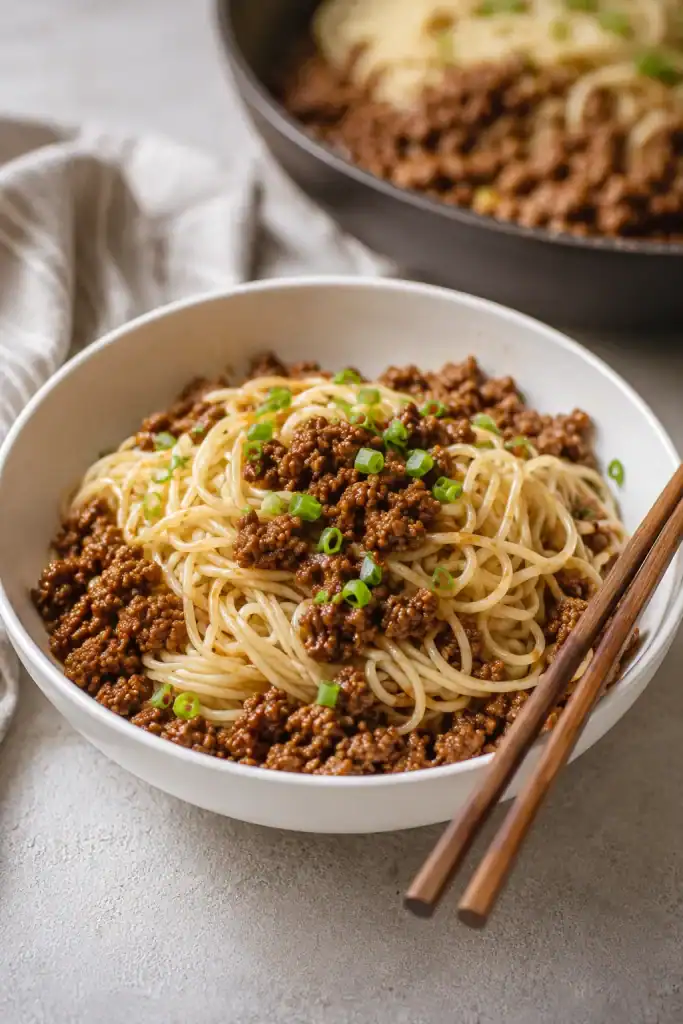
Transfer the Mongolian Ground Beef Noodles into serving bowls.
Finish with:
- Sesame seeds
- Fresh green onions
- Cilantro
- Extra chili flakes
Serve hot while the noodles are tender and the sauce is rich.
This dish pairs well with:
- Steamed vegetables
- Spring rolls
- Cucumber salad
- Egg rolls
- Asian-style soups
Tips for the Best Mongolian Ground Beef Noodles
Use fresh garlic and ginger
Fresh aromatics create a much stronger flavor than powdered versions.
Do not overcook the noodles
Slightly firm noodles hold their texture better after mixing with sauce.
Let the beef brown properly
A little caramelization adds a deeper, richer taste.
Balance the sauce
Mongolian-style sauces should have a balance between sweet, salty, and savory flavors.
Use a large pan
A crowded pan makes it harder to mix the noodles evenly.
Delicious Variations
Spicy Mongolian Beef Noodles
Add:
- Sriracha
- Chili oil
- Extra red pepper flakes
Vegetable Mongolian Noodles
Add:
- Broccoli
- Mushrooms
- Snow peas
- Cabbage
Creamy Mongolian Noodles
Add a small amount of cream cheese or coconut milk for a richer sauce.
Healthier Version
Use:
- Lean ground beef
- Whole wheat noodles
- More vegetables
- Reduced-sodium soy sauce
Protein Alternatives
You can replace ground beef with:
- Ground chicken
- Ground turkey
- Thinly sliced steak
- Ground pork
- Tofu
Storage and Reheating
Store leftovers in an airtight container in the refrigerator for up to 4 days.
To reheat:
- Warm in a skillet with a splash of water or broth.
- Stir until the noodles become soft again.
You can also microwave individual portions, but adding a little liquid helps prevent the noodles from drying out.
This dish can be frozen for up to 2 months, although the noodles may become slightly softer after thawing.
Final Thoughts
Mongolian Ground Beef Noodles are a simple yet flavorful meal that combines everything people love about comfort food: tender noodles, savory beef, colorful vegetables, and a rich homemade sauce.
With easy ingredients and a straightforward cooking process, this recipe transforms everyday pantry staples into a satisfying Asian-inspired dinner that the whole family will enjoy. Whether made for a quick weeknight meal or prepared for leftovers, these noodles deliver bold flavor in every bite.







No Responses Yet